
Academy
Cardio Before or After Your Workout? Here’s What the Research Actually Says

Jul
For decades, gym-goers have split into two camps: the treadmill-first warm-up crowd and the “save cardio for last” lifters. Both sides have always had an opinion. What’s changed recently is that we now have much better research to settle the debate, and the honest answer is: it depends on what you’re training for.
Here’s a breakdown of the science, what it means for different goals, and how to structure your own sessions.
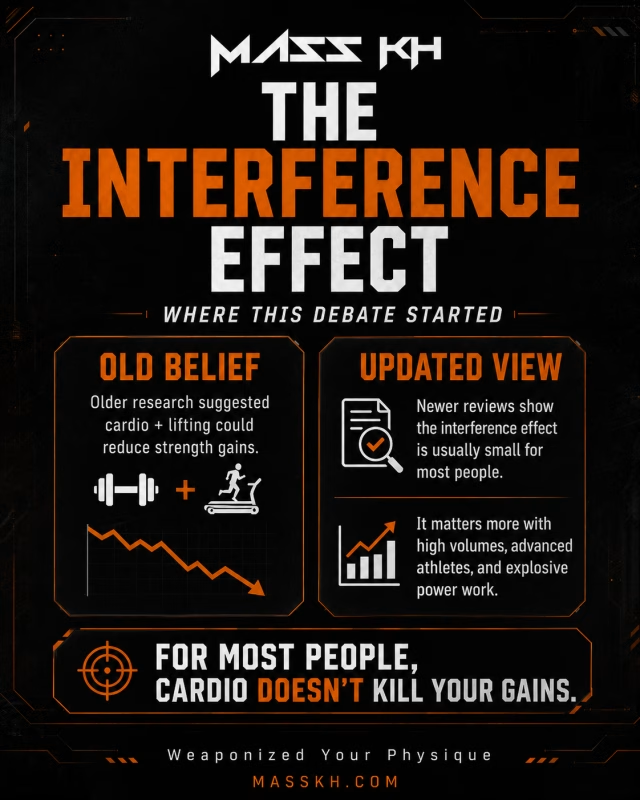
The “Interference Effect”: Where This Debate Started
The idea that cardio and strength training compete with each other goes back to a landmark 1980 study by exercise physiologist Robert Hickson, who found that untrained men made smaller strength gains when resistance training was combined with endurance training, compared to lifting alone. This became known as the interference effect, and for a long time it was gym gospel: do cardio and lifting together, and you’ll get worse results at both.
More recent research has walked that back considerably. A widely cited systematic review and meta-analysis found that for most people, doing cardio and weights in the same session has little to no effect on strength or muscle growth compared to training them on separate days. The interference effect turns out to be real, but much smaller and more situational than originally believed, and it shows up mainly in specific circumstances: high training volumes, advanced athletes, and outcomes tied to explosive power and rate of force development rather than raw strength or muscle size.
In short: for the average person doing a normal amount of training, worrying about cardio “killing your gains” is largely outdated advice. The more useful question isn’t whether to combine them, but in what order.
What Recent Research Says About Exercise Order
For Fat Loss: Weights First Wins
The clearest recent evidence comes from a 12-week controlled study published in the Journal of Exercise Science & Fitness, which followed young men with obesity split into a weights-first group and a cardio-first group, doing identical resistance and cycling workouts in reverse order five days a week.
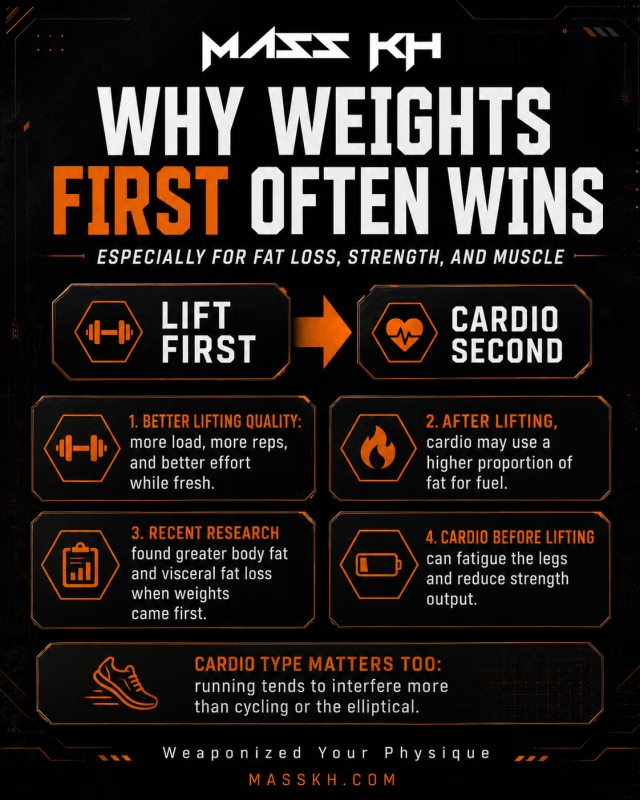
The results favored lifting first, and by a meaningful margin. The weights-first group lost significantly more total body fat and visceral fat (the deep abdominal fat linked to cardiovascular disease risk) than the cardio-first group. They also became more active outside the gym, logging roughly 3,500 more daily steps by the end of the study compared to about 1,600 more steps in the cardio-first group, and they made larger gains in muscular endurance and explosive strength.
The likely mechanism: resistance training depletes muscle glycogen (your body’s stored quick-access carbohydrate fuel). When cardio follows immediately after, the body has less glycogen available and shifts toward burning a higher proportion of fat for fuel during that cardio bout. Weightlifting after cardio doesn’t get the same benefit in reverse, since fatigue and glycogen depletion actually work against the heavy, high-effort lifting that drives muscle and strength adaptations.
For Strength and Muscle Growth: Weights First, Consistently
Across multiple studies, doing cardio before resistance training reduces performance on the lifts that follow, particularly for the lower body. Fatigued legs mean fewer reps, lighter loads, and a smaller growth stimulus on your main lifts. Resistance exercise performed first, while you’re fresh, consistently produces better strength and hypertrophy outcomes than resistance exercise performed after cardio.
If building muscle or getting stronger is your primary goal, this is the most consistent finding in the literature: lift first, do cardio second (or on a separate day).
For Endurance Performance: Flip the Order
If your main goal is running, cycling, or general aerobic fitness rather than muscle or strength, the calculus changes. Studies on training order for endurance-focused athletes have found that prioritizing the cardio session first, while your legs are fresh, produces better pacing, technique, and aerobic-specific adaptations. Interestingly, overall cardiovascular fitness improvements (VO2 max and similar measures) tend to be similar regardless of order for most people, so this matters most if you’re chasing a specific endurance performance goal like a race time.
The Type of Cardio Matters Too
Not all cardio interferes equally. Running, with its high-impact, eccentric loading, appears more likely to blunt strength and hypertrophy gains than low-impact options like cycling or the elliptical. If you’re trying to combine serious lifting with cardio in the same block of training, swapping some running sessions for cycling may reduce any interference without sacrificing cardiovascular benefit.
Does Same-Session vs. Separate-Day Training Matter?
Yes, somewhat. Several reviews point to the same conclusion: separating cardio and strength training by six or more hours, or doing them on entirely different days, minimizes any competition between the molecular signaling pathways involved (broadly, AMPK activation from endurance exercise versus mTOR activation that drives muscle growth). This isn’t necessary for most recreational lifters, but it’s a relevant consideration for competitive strength or physique athletes trying to optimize every variable.
For everyone else, training experience level matters more than most people realize. Beginners can build muscle and improve fitness with almost any reasonable combination of cardio and strength training, in either order, in the same session. The interference effect becomes more relevant as you get more advanced and closer to your genetic ceiling for strength or muscle size, where smaller variables start to matter more.
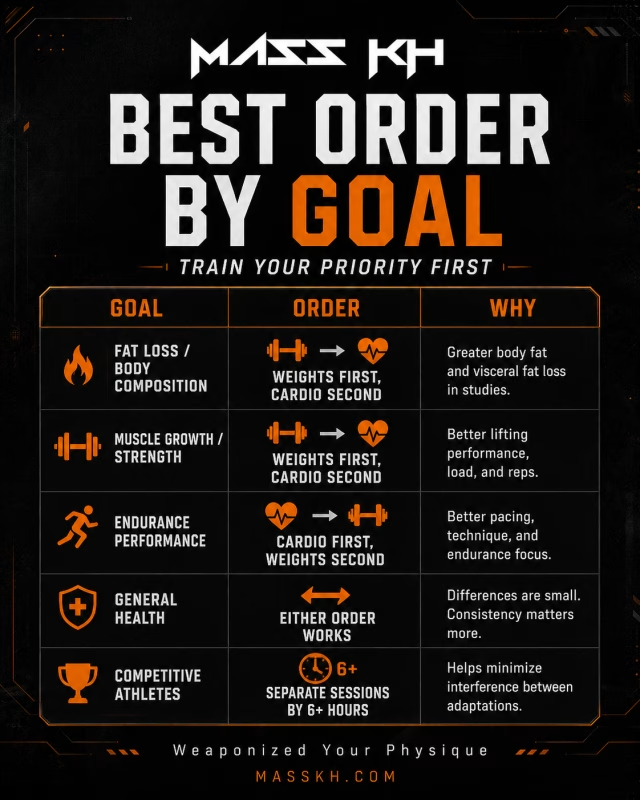
Practical Recommendations by Goal
| Your primary goal | Recommended order | Why |
|---|---|---|
| Fat loss / body composition | Weights first, cardio second | Greater fat and visceral fat loss; higher daily activity levels in studies |
| Muscle growth / strength | Weights first, cardio second (or separate days) | Fresh legs and full effort on lifts; cardio-first reduces load and reps |
| Endurance performance (running, cycling races) | Cardio first, weights second | Better pacing and technique; endurance-specific adaptations prioritized |
| General health / no specific priority | Either order works | Differences are small; consistency matters more than sequence |
| Serious competitive athletes | Separate sessions by 6+ hours, or different days | Minimizes any signaling interference between adaptations |
The Bottom Line
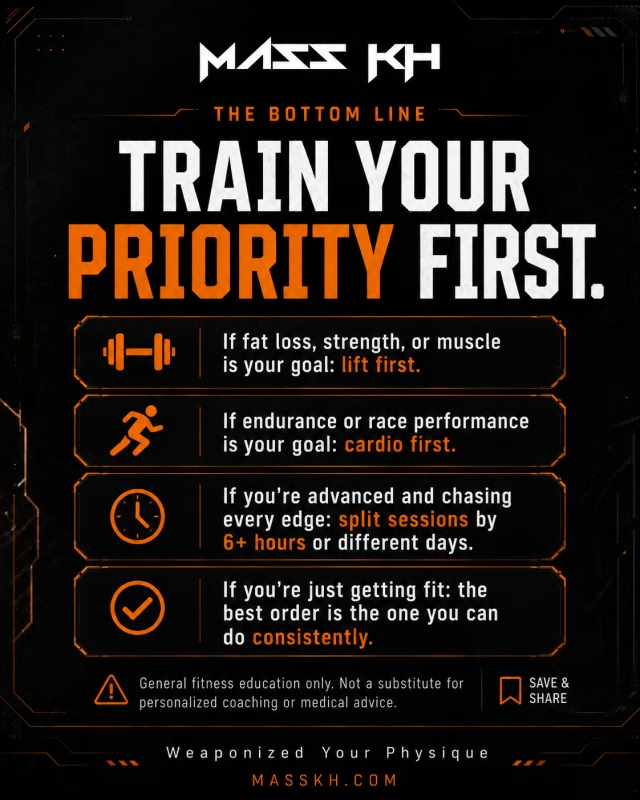
If you only take one thing from the research: train your priority first. If fat loss, strength, or muscle are what you care about most, lift before you do cardio. If you’re training for a race or endurance event, flip it and warm into your cardio work first. And if none of that applies and you’re just trying to stay generally fit and healthy, the order matters far less than actually showing up and doing both consistently.
This article summarizes current exercise science research and is intended for general fitness education. It isn’t a substitute for personalized advice from a coach, trainer, or physician, particularly if you have existing health conditions.